English
  中文
中文  한국어
한국어  français
  Deutsch
  Español
  italiano
  русский
  português
  العربية
  Polska
  Indonesia
With economic development and an increased market awareness, the use of self-adhesive labels has become more widespread. Whether on the outer packaging boxes of daily chemical products, the identifica...
View More

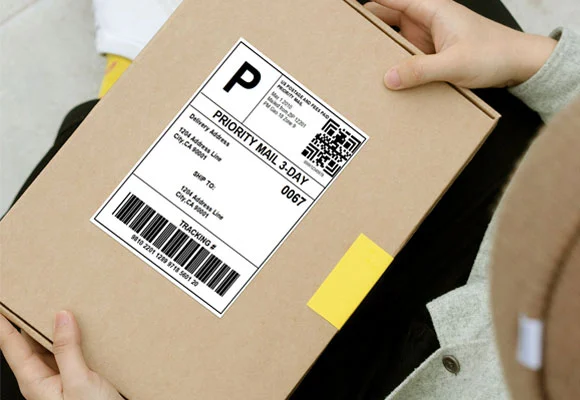
In recent years, self-adhesive labels have been widely used in product packaging. Self-adhesive labels can be seen on almost all types of product packaging. Self-adhesive labels are prone to problems during the pasting process, the most prominent of which is bulging or warping after labeling. Next, I will discuss this in depth with you, hoping to help more label printing companies avoid such problems.
Usually, the hydrosol coating quantity of self-adhesive materials is 12-24g/m², and the glue coating quantity of hot-melt adhesive is 12-18g/m². Some types of self adhesive labels have a relatively low glue coating quantity and a thin glue layer. If this type of self-adhesive material is affixed to the surface of a relatively rough surface, the thickness of the glue cannot fully combine with the surface of the object. After labeling, under the action of the reverse tension of the label, the label will loosen after a while. Gradually become warped.
Therefore, it is recommended that label printing companies fully understand the characteristics of the object to be attached and conduct labeling tests before choosing self-adhesive materials. Take a few more objects for the labeling test. If the label does not warp after 72 h, the thickness of the glue is acceptable. It should be noted that if the warping is caused by the thickness of the glue, almost no residual glue will remain on the surface of the object after the label is peeled off. This is obviously different from the warping of the label caused by insufficient stickiness of the glue.
The stickers on some plastic products are made of recycled materials. Some chemical additives (such as plasticizers) are added to the raw materials. After labeling, these additives seep out and react chemically with the glue, causing the viscosity of the glue to decrease. This causes the label to warp or bulge. Label lifting caused by this situation is likely to occur after a period of labeling. If the label is warped or bulged because of this reason, when the label is removed, the glue has changed significantly. For example, the glue may change from solid to liquid, or the viscosity of the glue may decrease significantly.
When encountering such problems, you need to work with the end user to find a solution. If necessary, you need to change the production process of the object to be pasted (such as changing a raw material additive, or reducing the amount of additives added). Some label printing companies have used the same material to supply several batches of goods to end users without any problems, but suddenly there is a problem with one batch. After testing, there are no problems with the initial viscosity, holding viscosity, and glue coating quantity of the material, and often there is no problem. This may be caused by changes in the end user’s production formula for the patch.
Sometimes the environmental humidity of some paper-based self-adhesive labels is low during processing, resulting in low moisture content in the label. After labeling for a period of time, the environmental humidity suddenly increases (such as after rain or snow), and the label absorbs the moisture in the environment and becomes If it expands, it is easy to cause bulging problems. In this case, it is best to place the label in the labeling workshop 24 h in advance to allow the moisture content of the label to reach a balance with the environmental moisture in the labeling workshop, so that the problem of bulging will be greatly reduced.
It should be noted here that to avoid such problems, many label printing companies, like Jinya Label, now recommend that end users coat labels to reduce the impact of external humidity.Simultaneously, label bulging due to changes in environmental humidity is also related to the viscosity of the glue. If the glue is sufficiently sticky, even if the label swells because of moisture, the bulging will be negligible and will not have a big impact on the appearance of the label. This is because the cohesive force of the glue sticks the label firmly to the surface of the object, preventing the label from expanding significantly.